
Chimney Repairs Across South London
Repointing, lead flashing renewals, flaunching, and stack rebuilds — diagnosing and fixing where the vast majority of "roof leaks" actually begin.
Why Chimneys Are the #1 Cause of "Roof Leaks"
Chimney flashing and masonry failure is, in practice, the single most common cause of internal water damage wrongly blamed on roof tiles.
Lead flashing around the base of a chimney stack expands and contracts with seasonal temperature changes. Over decades, lead aprons fatigue, hairline splits form, or the mortar holding the stepped flashing into the brickwork washes away. Rainwater driving against the stack penetrates behind the lead, travels down the internal brickwork, and manifests as damp stains on bedroom ceilings or chimney breasts—often metres away from where the water originally entered.
Across South London, Croydon, and Bromley, this problem is amplified by the sheer volume of period housing:
Shared Party-Wall Stacks (Dulwich, Catford, Beckenham, Croydon): Victorian and Edwardian terraces almost universally feature large chimney stacks straddling the party wall between two properties. Many of these stacks have stood exposed to the elements for over a century without ever being repointed or re-flashed.
Open, Disused Flues: As central heating replaced open fires, thousands of chimneys across suburban hubs like Bromley, Orpington, and Sidcup were decommissioned. An un-capped, un-vented chimney pot acts as an open funnel, allowing litres of rainwater to soak directly into the masonry core every time it rains.
Elevated Weather Exposure (Warlingham, Selsdon, Sevenoaks): Chimneys built on elevated ridge lines along the North Downs take the full force of driving rain and high winds, accelerating mortar erosion and destabilising chimney pots.

What Homeowners Say About Us
Real feedback from real jobs — roof repairs, replacements and flat roofing across London.


Signs Your Chimney Needs Attention
Damp or Brown Staining on Chimney Breasts: Tide marks appearing in upstairs bedrooms or downstairs living alcoves, particularly expanding after periods of driving rain.
Crumbling or Recessed Mortar Joints: Deep voids between the chimney bricks, visible from the ground, allowing water to soak deep into the stack structure.
Efflorescence (White Chalky Salts): White deposits appearing on internal or external brickwork, indicating active moisture transfer through the masonry.
Spalling Brick Faces: Bricks whose outer faces are flaking, cracking, or popping off due to trapped water freezing and expanding during winter.
Cracked or Missing Flaunching: The cement mortar crown (the flaunching) that beds the chimney pots has cracked, letting water pour directly into the top of the brickwork.
Lifting or Split Lead Aprons: Lead flashing pulling away from the brick courses or split along natural stress creases.
Debris in the Fireplace: Soot, sand, or brick dust dropping into closed or open fireplaces, signalling internal flue degradation.
Our Work Is 100% Guaranteed!
Our team proudly offers an on-time guarantee and a 100% customer satisfaction guarantee.
Our Chimney Repair Services
Lead Flashing Renewals (Aprons, Stepped Flashings & Soakers):
Removing perished, cracked, or cemented-over lead and installing new BS EN 12588 Code 4 or Code 5 milled lead. We chase directly into mortar joints, secure with lead wedges, and finish with high-grade lead sealant to guarantee a lifetime watertight seal.
Chimney Repointing & Brick Replacement:
Raking out deteriorated, crumbling mortar joints back to sound masonry and repointing with traditional lime or cement-based mortar matched to the era of your home. We cut out and replace spalled or blown bricks to restore structural strength.
Flaunching & Pot Re-Bedding:
Stripping cracked, loose cement flaunching at the top of the stack and replacing it with a heavily trowelled, weather-shedding mortar haunching, ensuring chimney pots are bedded rock-solid against gale-force winds.
Chimney Capping & Rain Cowls:
Fitting terracotta capping tiles, vented c-caps, or anti-downdraught bird cowls over disused flues to prevent rainwater entry and bird nesting while maintaining essential flue ventilation to stop internal condensation.
Partial or Complete Stack Rebuilds:
Where a stack has leaned, bowed, or suffered irreversible structural failure, we safely dismantle it down to sound roofline rafters and rebuild it using matched reclaimed imperial bricks.
Chimney Reductions & Removals:
Safely taking down unstable, redundant chimney stacks to below roofline level, closing the aperture, and continuing the timber rafters, underlay, and tiles over the opening for a completely flush, maintenance-free finish.
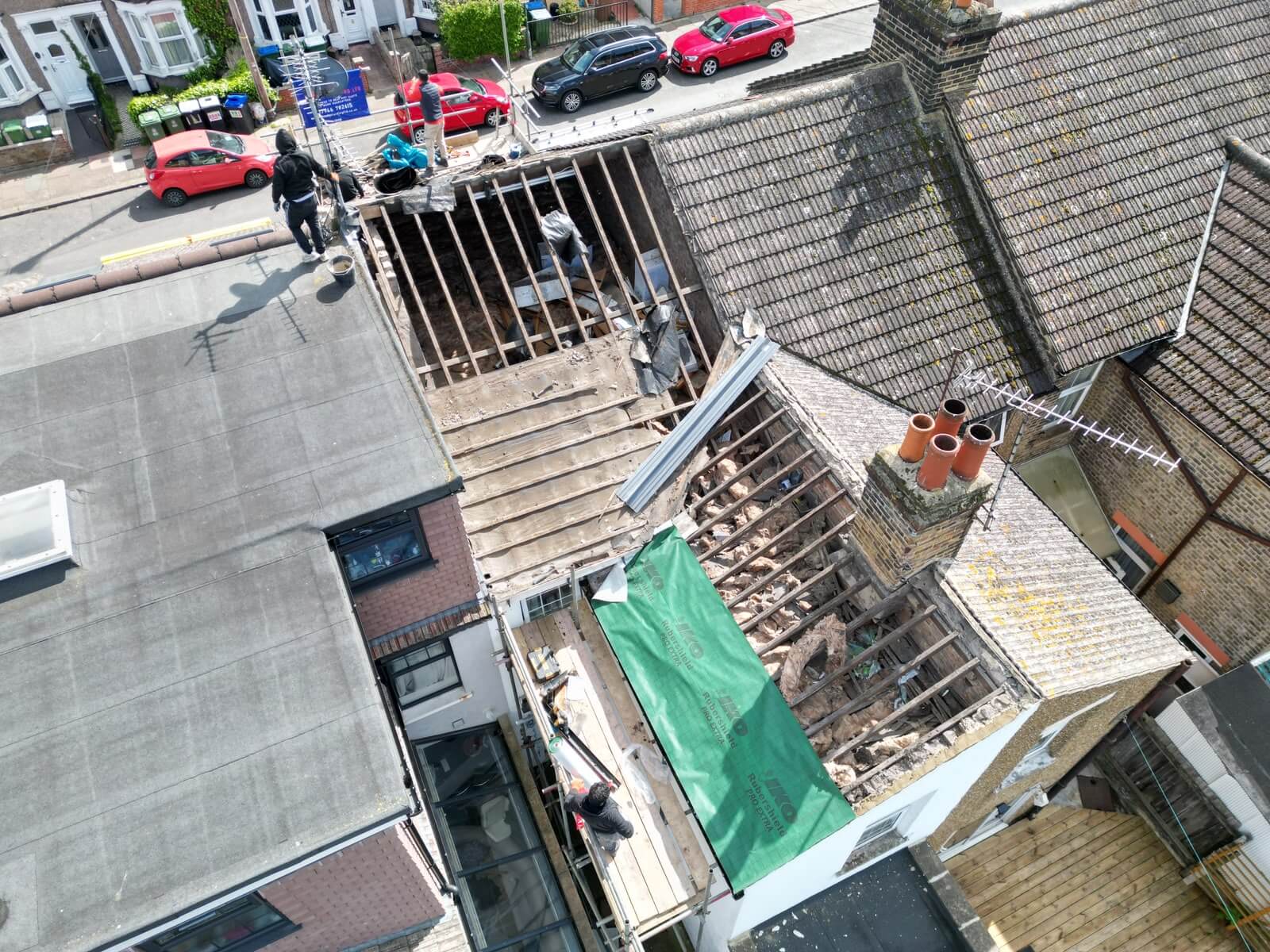
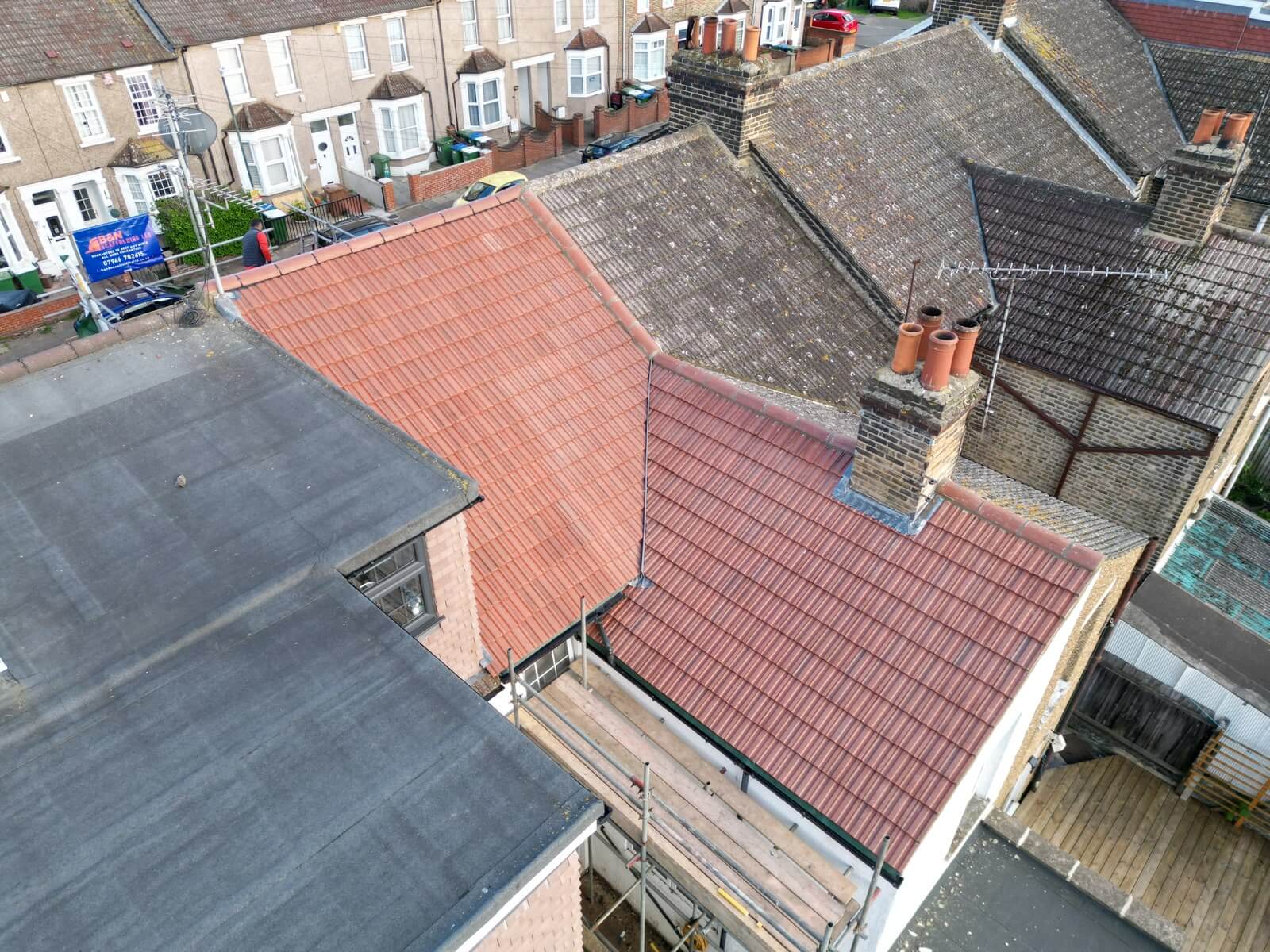
Photos Of Our Work
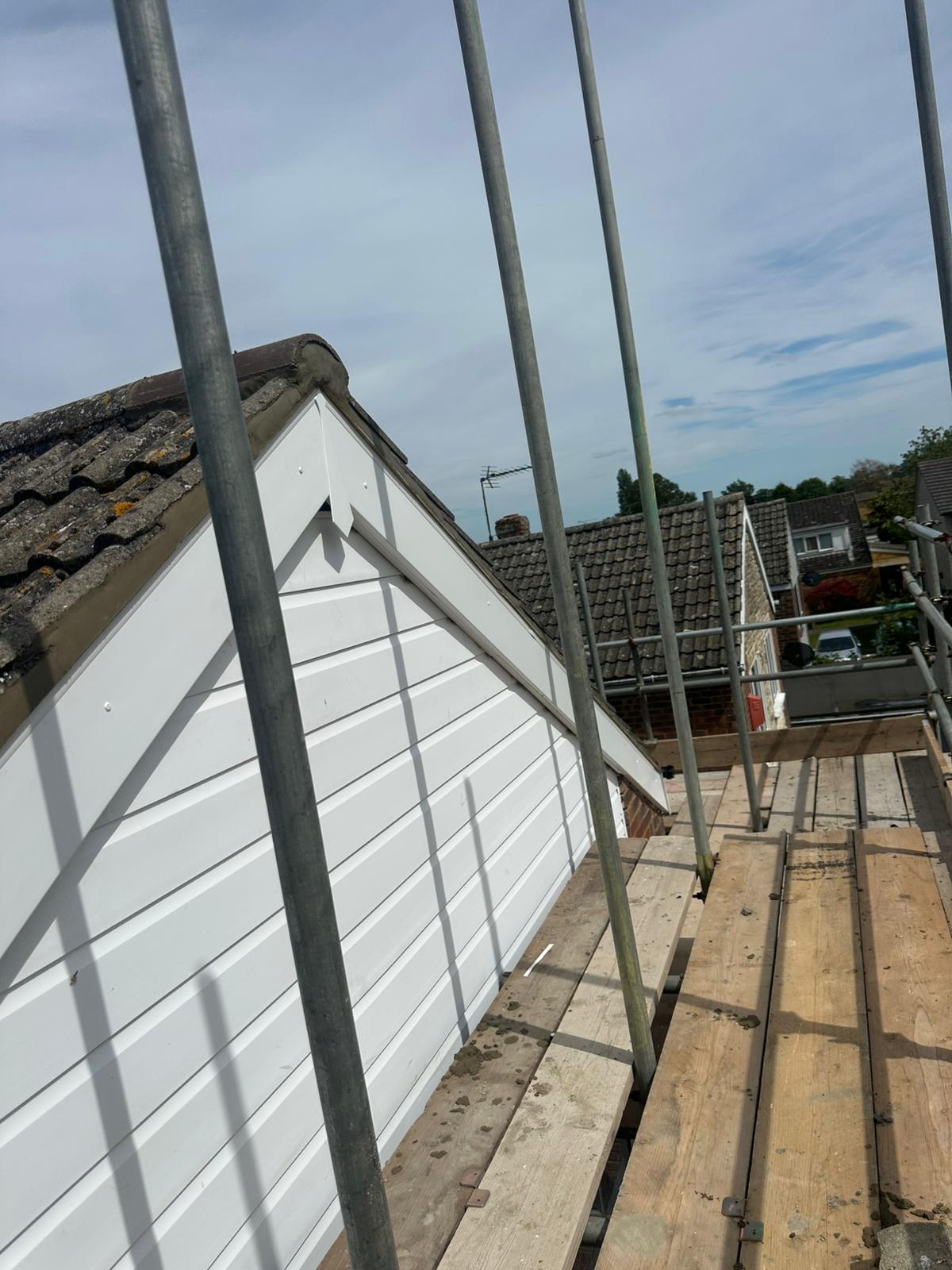
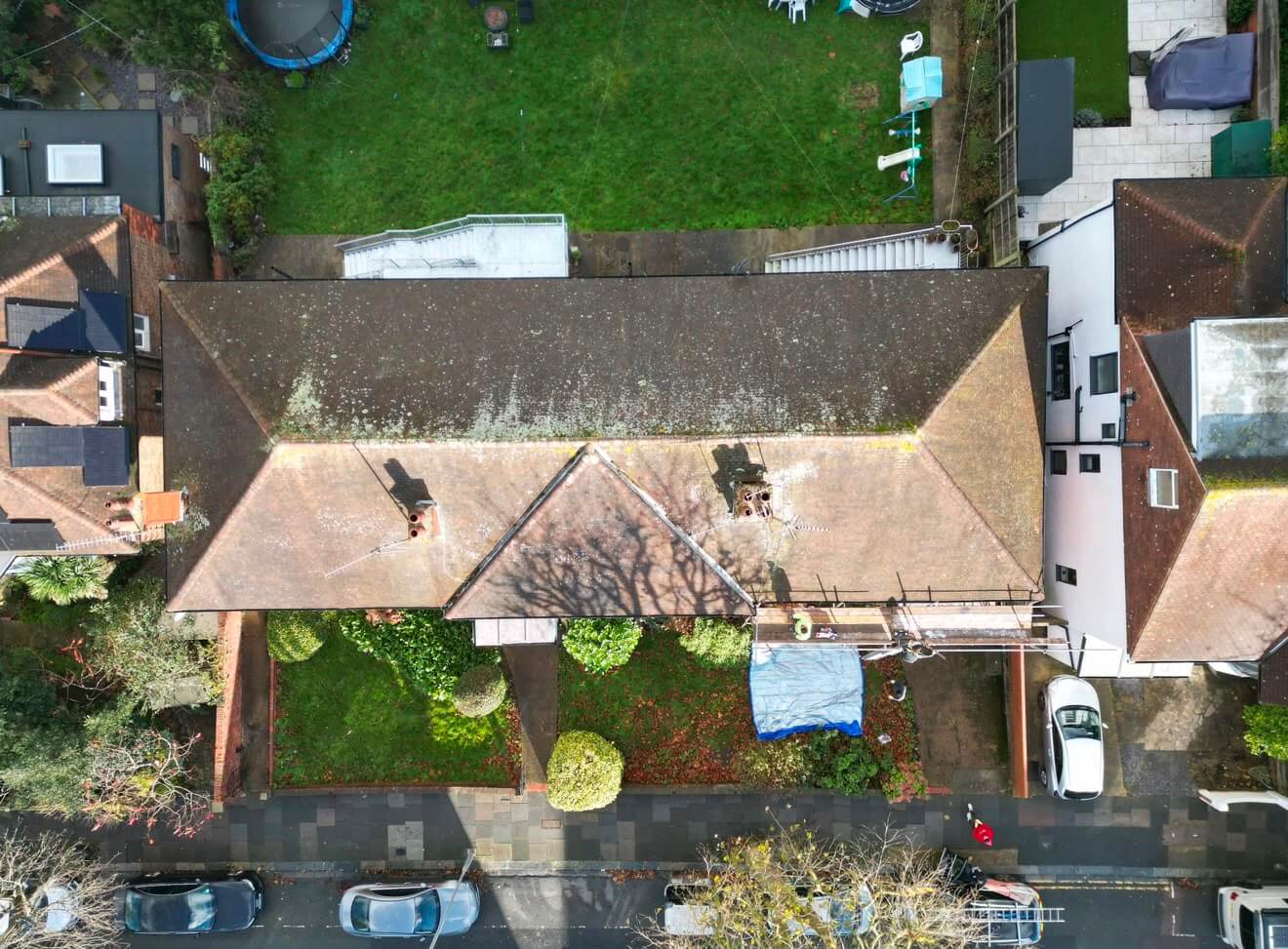
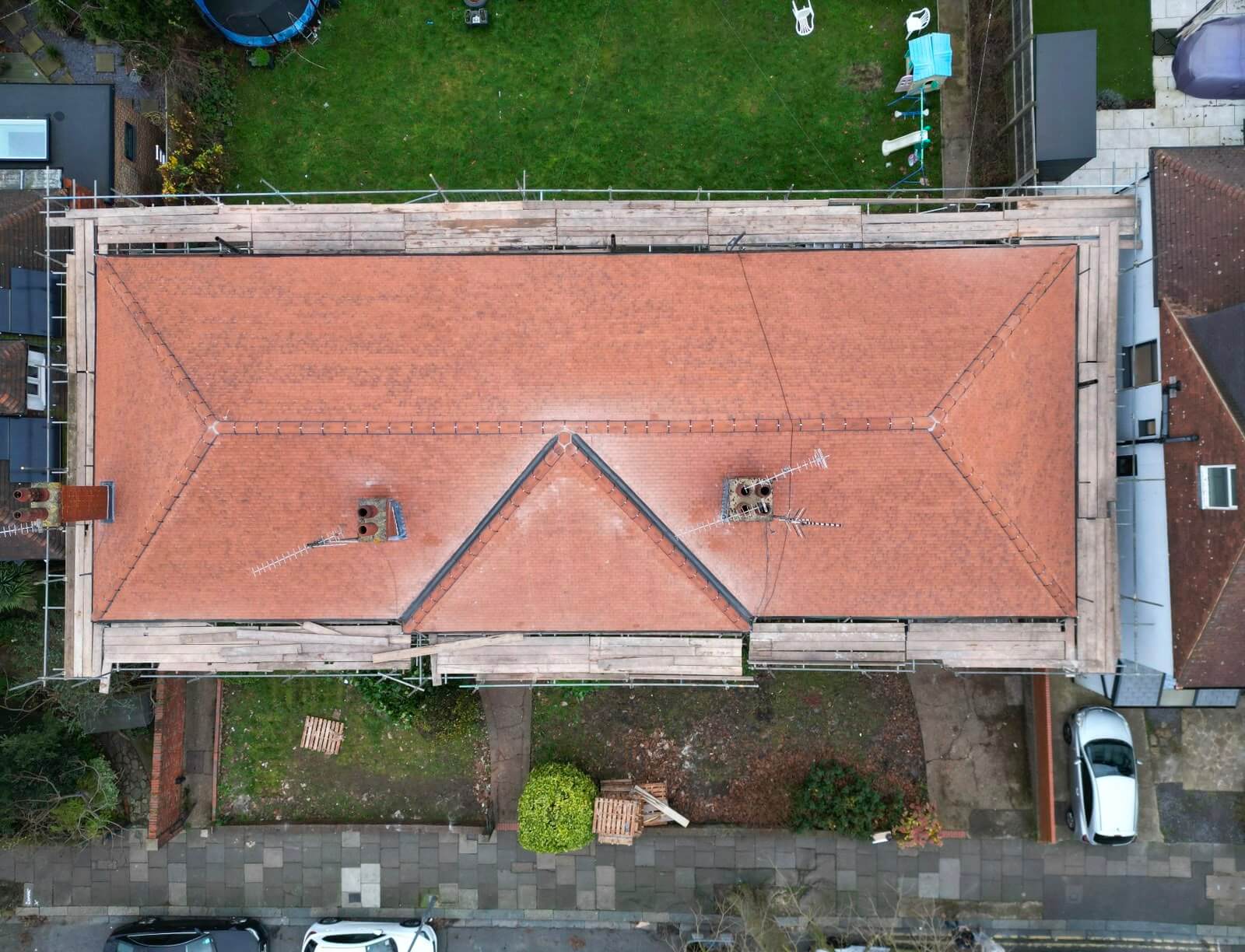
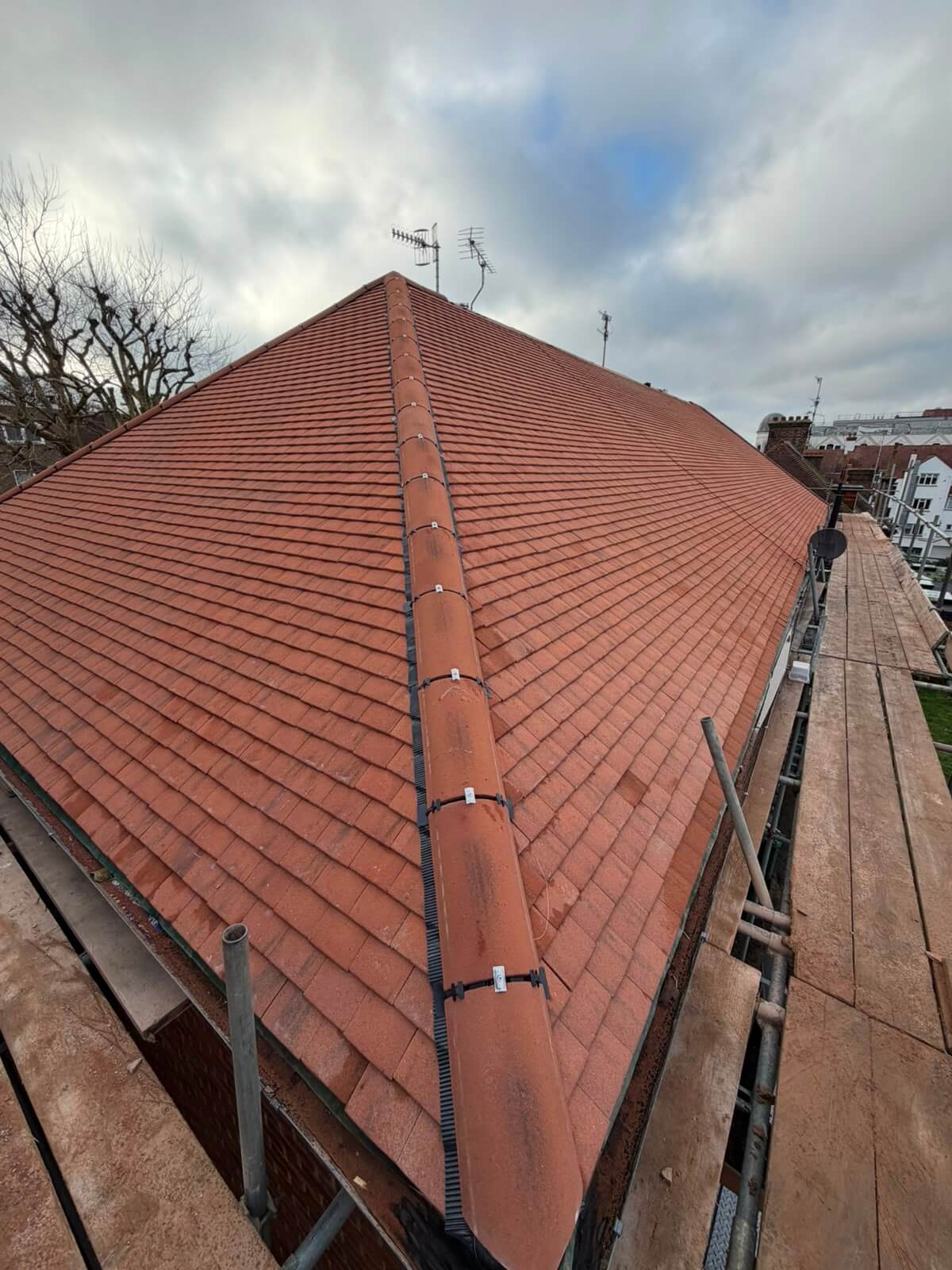
Chimney Repair FAQ's
How do I know whether my leak is coming from the roof tiles or the chimney?
Damp patches that track along the vertical face of a chimney breast, run down internal fireplace brickwork, or pool near the corners of the breast are almost always chimney-related. If the leak is spreading across the middle of an open ceiling expanse away from any wall, it is typically a roof tile, batten, or membrane issue.
My fireplace is blocked up. Do I still need to worry about the chimney stack?
Yes. In fact, disused chimneys often cause more damp problems than working ones. Without the natural heat of a fire drying out the flue, un-capped chimneys collect rainwater that slowly turns the soot inside into acidic, damp-laden sludge that bleeds through interior wallpaper and plaster. Fitting a vented rain cowl is essential.
What causes chimney bricks to crumble and flake (spall)?
Bricks are porous. When mortar fails, water saturates the brick body. In freezing winter weather, that trapped water expands, blowing the hard outer face off the brick (spalling). Once spalling begins, the softer internal clay is exposed to rapid erosion.
Do you need my neighbour's permission to work on a shared chimney stack?
If the chimney sits directly across a party wall—common on terraced and semi-detached properties in areas like Catford, Croydon, and Beckenham—it is shared property. Routine maintenance and like-for-like repairs generally do not require formal Party Wall Act notices, but it is always good practice to notify your neighbour beforehand. We are always happy to discuss access and split-cost options directly with your neighbour.
Can chimney repairs be completed without full scaffolding?
Minor flashing adjustments or small repointing jobs on low-pitch, accessible stacks can occasionally be carried out using specialist roof ladders or tower scaffolds. However, for full stack repointing, pot re-bedding, or rebuilds on two- and three-storey properties, scaffolding is legally required to ensure safety and allow proper mortar curing.
Any Questions?
Ask Us

Any Questions?
Ask Us
Areas We Cover
Safeguard Roofing provides chimney repairs, repointing, leadwork, and stack removals across South London, Bromley Borough, Croydon, and the North Kent/Surrey borders:
Bromley Borough: Bromley, Beckenham, Orpington, Chislehurst
Croydon & Surrey Borders: Croydon, Purley, Selsdon, Selhurst, Warlingham
South East London & Bexley: Dulwich, Catford, Eltham, Sidcup, Bexley
Kent Borders: Swanley, Sevenoaks
Additional Roofing Services in South London
If you have any leaky roof problems that have to be fixed fast or a leak in your gutter, we are the local roofing company for you!
Get Your Chimney Looked At Properly
A hairline crack in your chimney's mortar or lead flashing today can result in loose masonry falling in a storm, soaked structural ceilings, and costly rebuild bills tomorrow.
Call Harvey directly to discuss what you're seeing. He will inspect the stack from roof height, provide photographic proof of any damage, and give you an honest, fixed written quote.